Updated August 2026: the current circular is now AC 70/7460-1N, effective August 11, 2026. The article below reflects the rules in force when it was published.
Important info on a recent change to FAA Advisory Circular…
UPDATED: NOVEMBER 27, 2018
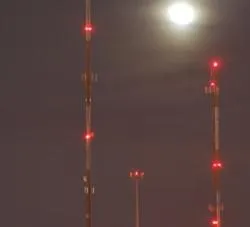
Legacy Red Obstruction Lighting
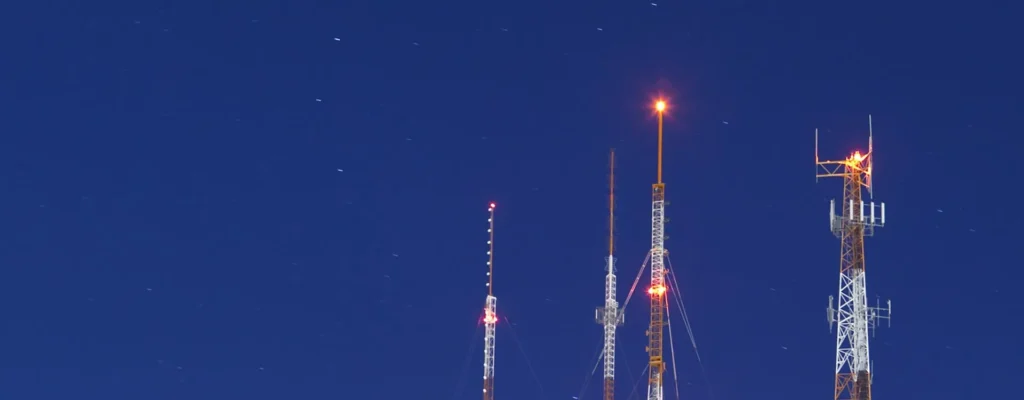
Background: Federal regulations for obstruction marking and lighting are governed by the applicable FAA Advisory Circulars, including the most recent, 70/7460-1L. A new FAA Obstruction Marking and Lighting Advisory Circular 70/7460-1L Change 2 which was issued on August 17, 2018. It appears that this change was deemed necessary to address the concern that certain red LED obstruction lighting systems fall outside the combined visible and near-infrared spectrum of Night Vision Goggles (NVGs) and ANVIS (Aviator’s Night Vision Imaging Systems) with a Class B filter. Pilots using ANVIS equipment that filter the adverse effects of cockpit lighting might not be able to see non-Infrared equipped red LED-based obstruction lighting. This type of night vision capability is becoming increasingly more common amongst civilian aircraft involved in search and rescue, emergency medical transport and other flight operations.
Please note that industry sources indicate that this is not yet a requirement and it is believed that the FAA will update the relevant engineering document AC 150/5345-43H: Specification for Obstruction Lighting Equipment thereby making the regulation effective. Also, it is understood that existing, non-IR LED lighting is grandfathered in under your current determination.
In this article we highlight key points of the updated circular.
Regulation change:
FAA Obstruction Marking and Lighting Advisory Circular 70/7460-1L Change 2 spells out a newly added paragraph detailing the regulation as follows:
“Note: In response to a Safety Risk Assessment of LED Lighting in Aircraft Operations, the FAA has established IR specifications for LED-based red obstruction lights. Specifications are contained in Airport Engineering Brief 98, Infrared Specifications for Aviation Obstruction Light Compatibility with Night Vision Goggles (NVGs), published December 18, 2017, and AC 150/5345-43H, Specification for Obstruction Lighting Equipment, dated September 28, 2016.”
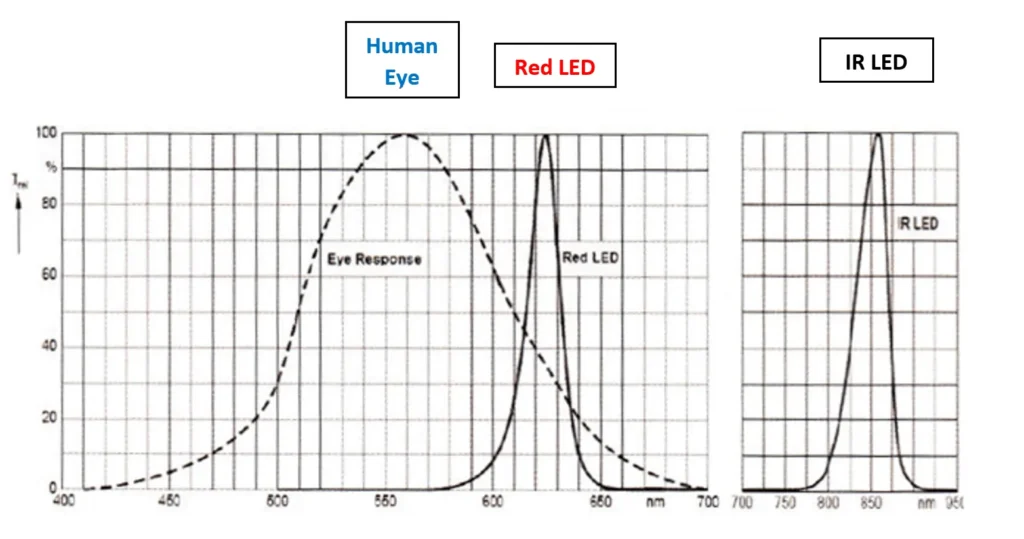
This newly added paragraph cross-references an associated Engineering Brief: Airport Engineering Brief 98 which provides information about the interaction of LEDs used in obstruction lighting fixtures with Night Vision Goggles. There are several key takeaways:
- IR (infrared) LEDS should have the same beam pattern as the red visible LEDs as defined in AC 150/5345-43.
- IR LEDs should mimic the same pulse and duration as the red visible light to prevent pilots from experiencing a visual disparity when looking through and under the NVG.
- Failure of the IR LEDs is considered a fail status and a Notice to Airmen (NOTAM) is required.
Conclusion:
The new Advisory Circular specifies that infrared (IR) LEDs will be required in the L-864, L-885 and L-810 fixtures to make the lighting systems more visible to Night Vision Goggles (NVGs) and Aviator’s Night Vision Imaging Systems (ANVIS) and must include IR emitters or be used in conjunction with a standalone IR emitter.
Industry sources indicate that this is not yet a requirement and it is believed that the FAA will update the relevant engineering document AC 150/5345-43H: Specification for Obstruction Lighting Equipment thereby making the regulation effective. Also, it is understood that existing, non-IR LED lighting is grandfathered in under your current determination.
More Information on LumenServe’s Portal:
LumenServe’s FAA Regulations Portal contains all the important links to Federal obstruction lighting regulations for your towers including:
- Full color Lighting System Illustrations for each of the most common FAA tower styles.
- Links to helpful FCC/FAA tower related sites.
- All the links to the current and previous FAA Advisory Circulars which govern obstruction lighting (AC 70/7460) Change 2.
- Request an FAA Tower Lighting Compliance Illustration – the industry’s best illustration to help simplified tower lighting compliance.
We hope our article on IR light standards is helpful. Remember that LumenServe can help you analyze the costs and benefits of all your options for compliance. Also, do not forget, as the nation’s first Tower Lighting as a Service company, LumenServe can provide qualified customers with an IR compliant lighting solution that requires no-upfront costs.
For more information, please contact LumenServe at: