Updated August 2026: the current circular is now AC 70/7460-1N, effective August 11, 2026. The article below reflects the rules in force when it was published.
Here’s a summary of the “7/8 Inch Rule”, what to avoid and how to resolve.
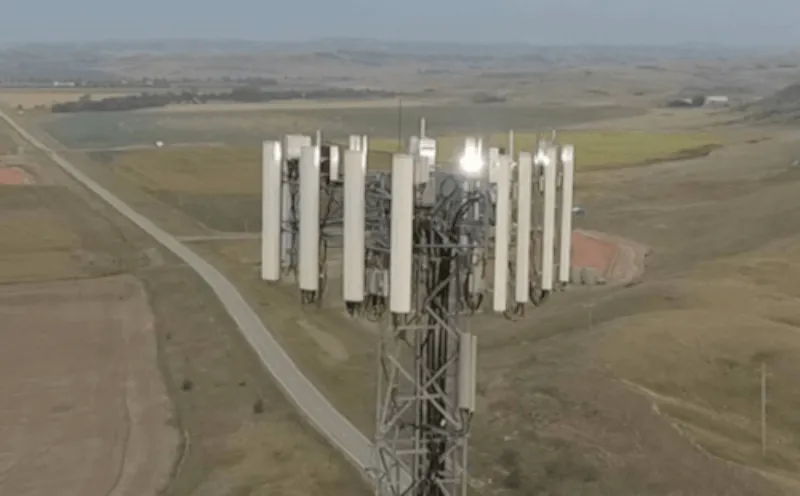
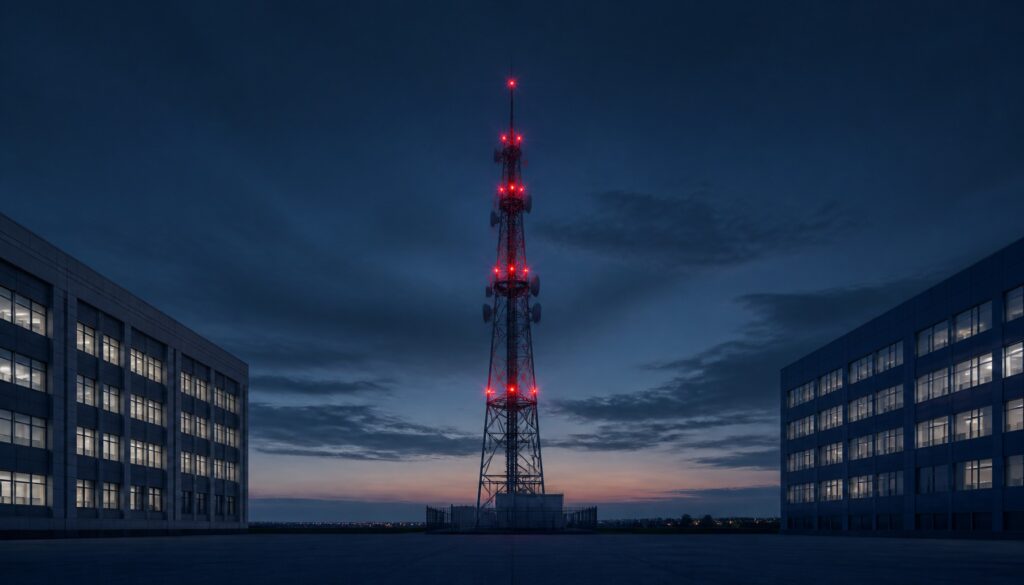
Here is an example of a tower lighting beacon that is nested below antennas that are greater than 7/8” diameter. This lighting system is out of compliance and is creating a hazard due to lack of visibility.
Background
Towers are vertical real estate. Real estate is all about “location, location, location”. Of course, the prime location in vertical real estate is at the top of the tower. This can lead to the addition of antennas over time as this prime real estate is crowded. To ensure proper visibility of the any light on tower the FAA has included provisions in its Advisory Circular regarding the maximum size of any object, either horizontally or vertically, blocking, or partially blocking, visibility of the that light. The regulation spells out limits on such situations which are referred to by some as the “7/8 Inch Rule.” In this article we point to the regulation and review ways to resolve this issue if you encounter it.
Regulation
FAA Advisory Circular 70/7460-1L CHG1 Section 4.7.7 spells out the regulation as follows:
Nesting of Lights. Care should be taken to ensure that obstruction lights do not
become blocked or “nested” as new antennas, hardware, or appurtenances are added to the top of a structure. If new equipment is added that blocks the obstruction light’s visibility, the light fixtures must be relocated and/or raised so that it is not blocked by the new equipment. For example, when new larger cellular antenna panels are fitted to older towers, the obstruction light will need to be raised so that it is not blocked by the larger antenna panels. The widest structure, appurtenance, lightning rod, or antenna that can be placed in front of an obstruction light (excluding the L-810 light) without significantly blocking the obstruction light’s visibility should be no wider than 7/8 of an inch. Due to their smaller size, L-810 lights should not be blocked by any structure.
Examples
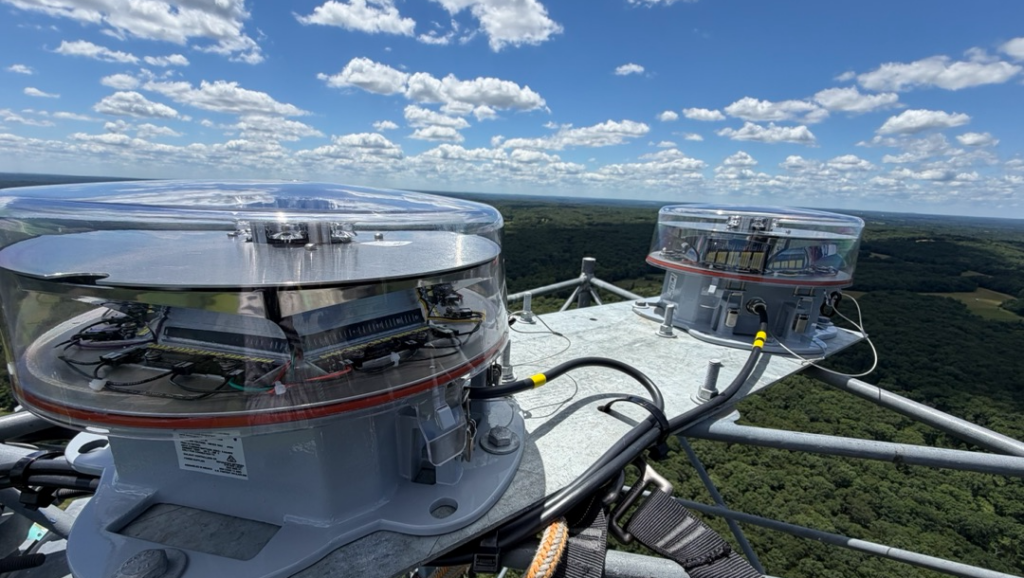
Here are a few examples of 7/8 Inch Rule violations that may not be as obvious to a tower owner.
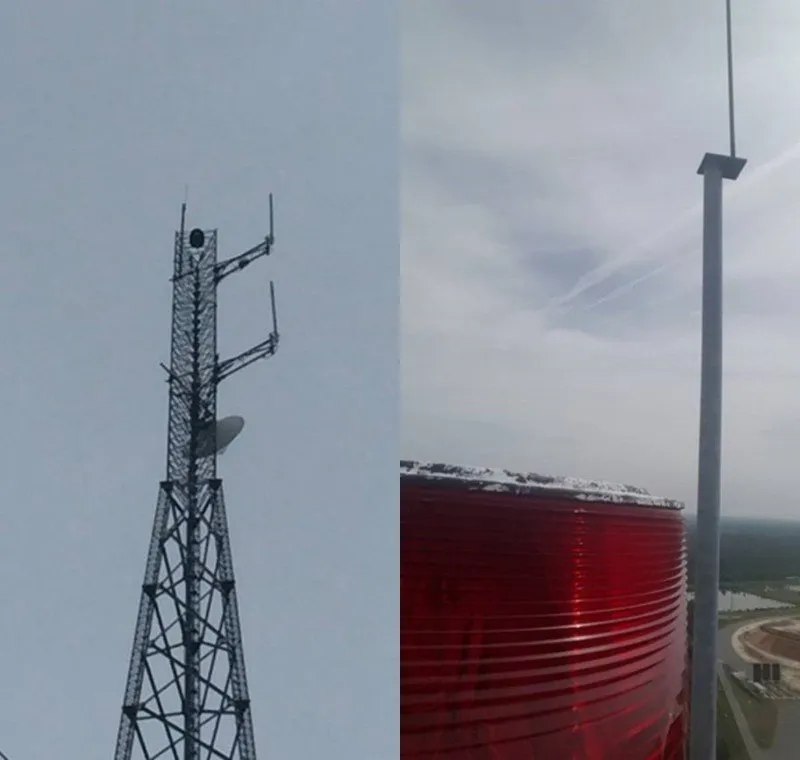
Noncompliance as viewed from the ground. | Noncompliance as viewed from the top.
Approaches to Fix the Problem
There are three basic resolutions to the problem.
- Remove any antennas or other object that cause noncompliance. This is obvious, but typically not simple or even feasible.
- Extend the beacon using a beacon extension system. This is a logical approach that can ensure compliance. The biggest challenges are to ensure proper mounting infrastructure and structural integrity and to make sure you have the proper service loop existing in the cable. If the cable’s service loop is not long enough then a re-wire may be required or the installation of an undesirable electrical junction at the top.
- Install a “+1 system”. This solution involves repositioning the existing beacon and adding a second beacon, both positioned in a manner to ensure 360° visibility of the system. This offers the advantage of not having to move any antennas or other items but creates the need for a second beacon. The second beacon would need to be engineered to ensure proper cabling connectivity and control resulting in synchronous flashing with the other beacons on the tower.
More Information on our Portal
LumenServe’s FAARegulations Portal contains all the important links to Federal obstruction lighting regulations for your towers including:
- Full color FAA Lighting System Illustrations for each of the most common tower styles.
- Links to helpful FCC/FAA tower related sites.
- All the links to the current and previous FAA Circulars which govern obstruction lighting (AC 70/7460).
- Request an FAA Tower Lighting Compliance Illustration – the industry’s best illustration to help simplified tower lighting compliance.
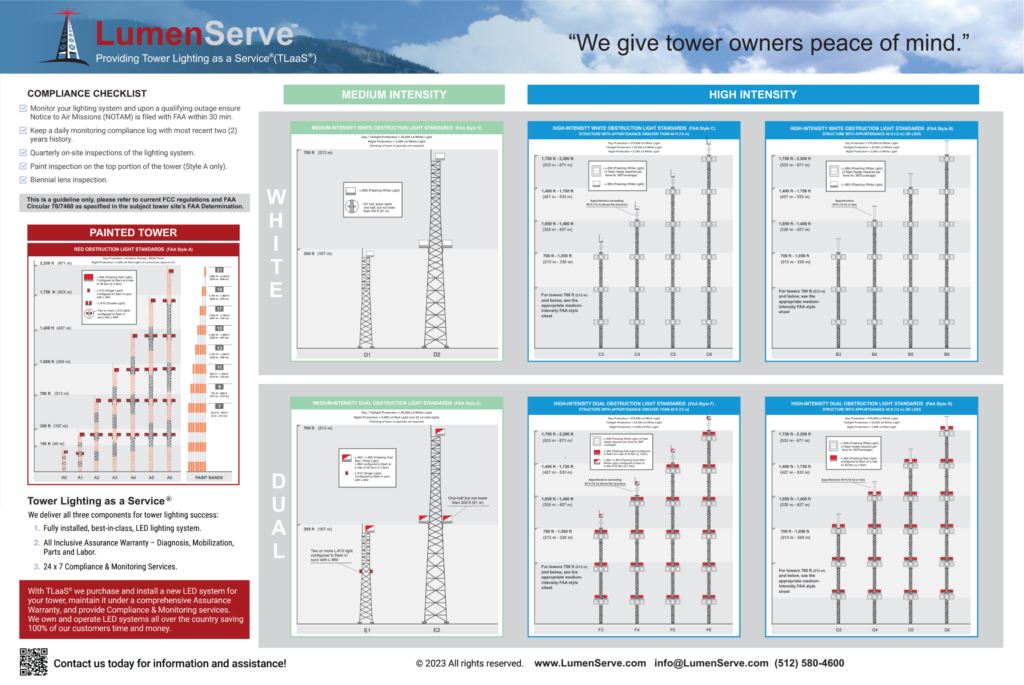
We hope our article on the 7/8 Inch Rule is helpful and remember that LumenServe can help you analyze the costs and benefits of all your options. Also, do not forget, as the nation’s first Tower Lighting as a Service company, LumenServe can provide qualified customers with a lighting solution that requires no-upfront costs.
For more information, please contact LumenServe at: