Short answer: The FAA requires most structures over 200 feet above ground level to be marked and lighted so pilots can see them, following Advisory Circular 70/7460-1N. Once a tower is lit, the FCC’s rules in 47 CFR Part 17 put the ongoing burden on the tower owner: observe the lights at least every 24 hours (or run a monitored alarm), report any top or flashing light that is out for more than 30 minutes to the FAA by filing a NOTAM, inspect the control equipment every three months, and keep the records for two years. This guide walks through every one of those obligations in plain English.
TL;DR: FAA tower lighting requirements at a glance
- Who must light a tower: generally any structure over 200 feet AGL, or one that exceeds the 14 CFR Part 77 obstruction standards near an airport.
- Register it: structures needing FAA notification must be registered with the FCC (Antenna Structure Registration, or ASR) before construction.
- Monitor daily: observe the lights every 24 hours, or maintain an automatic alarm that flags a failure (47 CFR 17.47).
- Report outages fast: a top steady-burning or any flashing light out more than 30 minutes must be reported to the FAA, which issues a NOTAM (47 CFR 17.48).
- Inspect quarterly: check all control devices, indicators, and alarms at intervals not to exceed three months (47 CFR 17.47).
- Keep records two years: log every outage, notification, and repair and retain it for two years (47 CFR 17.49).
- The owner is liable for all of the above, not the contractor. Missing any step is an FCC violation.
Which towers have to be lit?
Marking and lighting generally become mandatory once a structure passes 200 feet above ground level (AGL). Per AC 70/7460-1N, any temporary or permanent structure, including all appurtenances, that exceeds an overall height of 200 feet AGL or any obstruction standard in 14 CFR Part 77 should be marked and/or lighted. Structures shorter than 200 feet can still require lighting when they sit near an airport and penetrate a Part 77 surface, so height alone is not the only test.
The determination is made through the FAA’s aeronautical study when you file Form 7460-1. In short: if the FAA study says your structure is a hazard to air navigation, you light it to the specification the FAA assigns.
What is FCC Antenna Structure Registration (ASR)?
Antenna Structure Registration (ASR) is the FCC’s record of a tower that requires FAA notification. If your structure needs to be studied and lit by the FAA, the owner must register it with the FCC before construction and display the registration number at the site. The ASR record is what ties the physical tower to the lighting specification the owner is legally bound to maintain under 47 CFR Part 17. Register the structure first; the compliance obligations below attach to that registration.
What lighting system does your tower need?
The FAA assigns a lighting style based on the tower’s height, location, and daytime visibility. The fixtures fall into a handful of standard FAA types, and taller or more prominent towers step up to brighter, more expensive equipment.
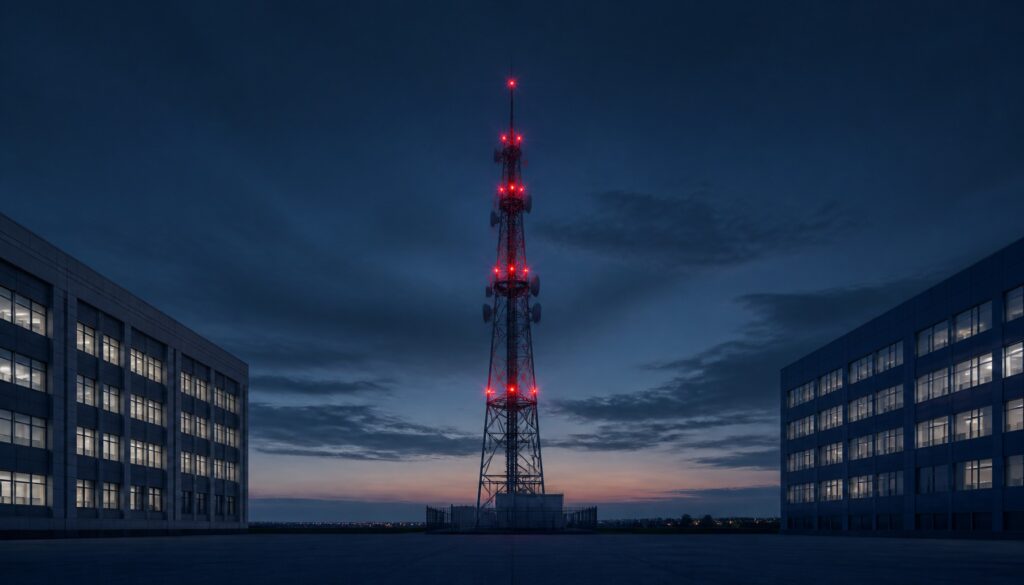
A red system runs steady or flashing red at night; a white system flashes high-intensity white day and night; a dual system uses white by day and red by night. Which one you get is the FAA’s call, not the owner’s preference. Whatever style is assigned, the same monitoring, reporting, and recordkeeping duties below apply.
For a full breakdown of these configurations and the standard FAA system layouts, see our guide to FAA tower lighting system types.
How many lights, and how many levels?
A tall tower is not lit at the top alone. AC 70/7460-1N sets the number of light units per level by the structure’s diameter, and adds lighting levels as the tower gets taller:
Height then drives how many levels you need. A structure exceeding 600 feet AGL should carry a second level of lights at roughly the midpoint, in a vertical line with the top lights, and still-taller towers add more intermediate levels. More levels and more units per level mean more fixtures, wiring, and certified-climb labor, which is what makes tall-tower systems so much more expensive to install and maintain.
The daily monitoring requirement (47 CFR 17.47)
Every lit tower must have its lights checked at least once every 24 hours. Under 47 CFR 17.47, the owner must either observe the antenna structure’s lights every 24 hours (visually or by watching a properly maintained automatic indicator), or provide and maintain an automatic alarm system designed to detect a failure and signal it to the owner. In practice, almost every modern operator uses a monitored alarm because a nightly visual check on a remote 300-foot tower is not realistic. This 24-hour clock is the foundation of the whole compliance regime: you cannot report an outage you never detected.
Outage reporting: the 30-minute rule and NOTAMs (47 CFR 17.48)
If a top steady-burning light or any flashing obstruction light fails and is not restored within 30 minutes, the owner must report it to the FAA. Under 47 CFR 17.48, that report triggers a NOTAM (Notice to Air Missions) warning pilots the obstruction light is out. If the repair runs past the NOTAM’s window, the owner must contact the FAA to extend it and give a return-to-service estimate, repeating until the light is fixed. When the light is restored, the owner must notify the FAA again to cancel the NOTAM. Side intermediate lights must be corrected promptly but do not require the FAA notification. For the full step-by-step, see our guide on what to do when a tower light goes out.
Quarterly inspections of control equipment (47 CFR 17.47)
Beyond the daily light check, owners must inspect the lighting control equipment every three months. 47 CFR 17.47 requires inspecting, at intervals not to exceed three months, all automatic or mechanical control devices, indicators, and alarm systems tied to the tower lighting, to confirm they are working. This is the check that keeps the monitoring itself honest: a photocell, flasher, or alarm that has quietly failed will not tell you when a light goes dark.
Recordkeeping: the two-year rule (47 CFR 17.49)
Owners must document every lighting failure and keep the records for two years. 47 CFR 17.49 requires recording the nature of each extinguishment or malfunction, the date and time it was observed, the date and time of FAA notification (if any), and the date, time, and nature of the repairs or replacements made. Those records must be retained for two years and produced to the FCC or its agents on request. When an FCC inspector or a post-incident audit comes, this log is your proof of compliance, so a gap in the records is itself a finding.
Marking and painting upkeep (47 CFR Part 17)
Painted obstruction marking has to be maintained, not just applied once. Where a structure is marked with aviation orange-and-white paint (FAA marking styles), Part 17 requires owners to keep those markings clean and repainted as often as necessary to preserve good visibility. Faded or dirty marking is as much a violation as a dead light. Some owners avoid the repaint cycle entirely by converting a paint-marked (Style A) tower to a lighting-only (Style E) configuration, which trades a recurring paint obligation for a lighting one.
LED vs. incandescent and what compliance costs
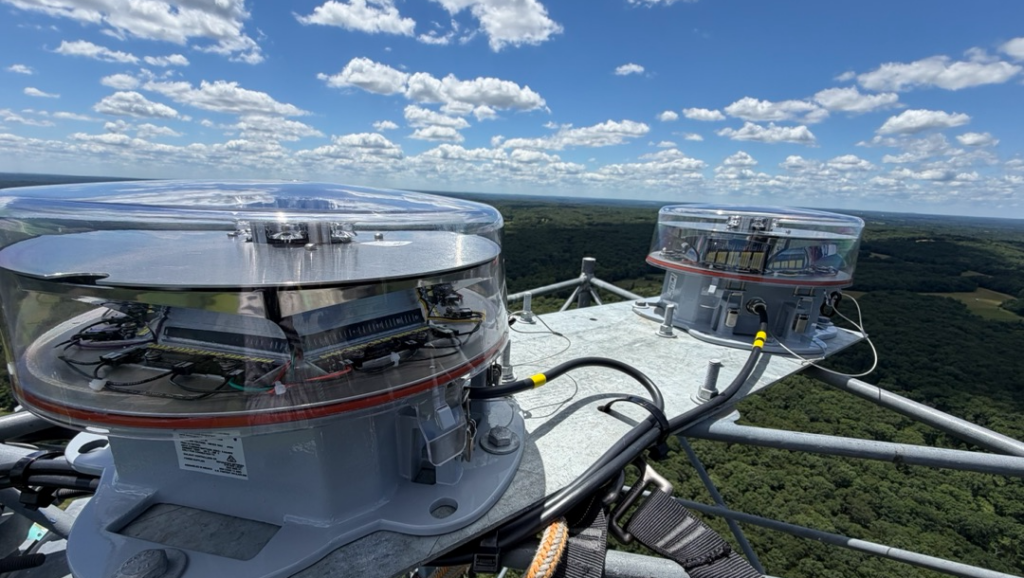
The rules are the same regardless of fixture technology, but LED makes them cheaper to satisfy. LED obstruction lights are rated for far longer life and draw much less power than incandescent lamps, which means fewer outages, fewer NOTAMs, and fewer emergency climbs over the life of the system. The catch is the upfront cost of the fixtures, install labor, and monitoring. For the full breakdown of what a system costs and how the ownership math works, see what LED tower lighting costs.
The compliance burden owners underestimate
Reading the list above, the pattern is clear: the hardware is a one-time purchase, but the FAA and FCC obligations are forever. For as long as you own a lit tower you are on the hook for 24/7 monitoring, sub-30-minute outage detection, NOTAM filing and cancellation, quarterly equipment checks, two years of rolling records, and paint upkeep, with the violation risk sitting on the owner. Over a tower’s life these recurring duties routinely cost more, and cause more 2 a.m. scrambles, than the lights themselves.
How Tower Lighting as a Service keeps you compliant
Tower Lighting as a Service (TLaaS®) is a model in which LumenServe installs the LED system and takes on the full FAA/FCC compliance obligation for a single predictable fee. Instead of buying the hardware and then owning every requirement in this guide, with TLaaS® you get:
- A new, industry-leading LED lighting system installed at LumenServe’s expense, no upfront capital cost.
- 24/7/365 monitoring with automatic outage detection that meets the 24-hour and 30-minute rules.
- NOTAM filing and cancellation handled for you, every time.
- Quarterly control-equipment inspections, maintenance, and repairs included.
- Two-year-retention records kept audit-ready for any FCC request.
You get modern LED lighting and full FAA/FCC compliance without managing a single one of the obligations above. LumenServe pioneered TLaaS® and supports 1,000+ towers nationwide.
Talk to LumenServe about your tower lighting compliance →
If a light on one of your towers goes out, our guide walks through how to file and clear a NOTAM, and for what a missed or late report can cost, see FCC tower lighting fines.
Want the source documents? Our FAA regulations library has the current circular (AC 70/7460-1N), every prior edition, and the Style A to G lighting charts.
Frequently Asked Questions About FAA Tower Lighting Requirements
Quick answers to the questions tower owners ask most.
What are the FAA tower lighting requirements?
Structures over 200 feet AGL (or that exceed 14 CFR Part 77 near an airport) must be marked and lighted per FAA AC 70/7460-1N. The owner must then monitor the lights every 24 hours, report outages over 30 minutes to the FAA via a NOTAM, inspect control equipment quarterly, and keep records for two years under 47 CFR Part 17.
What height requires FAA tower lighting?
Generally any structure taller than 200 feet above ground level requires FAA obstruction lighting. Shorter structures can also require it if they sit near an airport and penetrate a 14 CFR Part 77 surface, so the FAA’s aeronautical study, not height alone, makes the final call.
How often do tower lights have to be checked?
At least once every 24 hours, either by visual observation or an automatic monitored alarm, under 47 CFR 17.47. Separately, all lighting control devices, indicators, and alarms must be inspected at intervals not to exceed three months.
What happens if a tower light goes out?
If a top steady-burning or any flashing obstruction light is out for more than 30 minutes, the owner must report it to the FAA, which issues a NOTAM warning pilots. The owner extends the NOTAM if repairs run long and notifies the FAA to cancel it once the light is restored (47 CFR 17.48).
How long must tower lighting records be kept?
Two years. Under 47 CFR 17.49, owners must record every light failure, the times it was observed and reported, and the repairs made, and retain those records for two years to produce to the FCC on request.
Who is responsible for FAA tower lighting compliance?
The tower owner, not the installer or maintenance contractor. Every monitoring, reporting, inspection, and recordkeeping duty under 47 CFR Part 17 rests with the registered owner, who bears the violation risk if any step is missed.
Sources
- FAA Advisory Circular 70/7460-1N, Obstruction Marking and Lighting (200 ft threshold, light units per level, 600 ft midpoint level, fixture styles)
- 47 CFR §17.47 (24-hour observation; three-month control-device inspection)
- 47 CFR §17.48 (30-minute outage reporting; NOTAM; restoration notice)
- 47 CFR §17.49 (recordkeeping; two-year retention)
- 47 CFR Part 17 and 14 CFR Part 77 (registration, marking upkeep, obstruction standards)