Quick answer: Winter does not change what the FAA and FCC require of a lit tower, but it changes what compliance costs. Ice, wind and lost power cause outages at the time of year when a crew can least safely climb, so repairs take longer and each one is billed as its own project: a climb, a mobilization, parts and labor. Our own cost study puts a single bulb change with crew labor at $1,601 to $6,670 in 2026. And this is before you factor challenges that winter weather can cost. The way to take winter surge out of your budget is to lean on LumenServe to get you fixed costs before the storm, with a warranty or service that covers the climb, parts and all labor.
Key takeaways
- A top steady-burning light or any flashing obstruction light that is not corrected within 30 minutes must be reported to the FAA, in any season (47 CFR §17.48).
- In a winter storm the usual point of failure is power, not steel. After Winter Storm Fern in January 2026, the FCC attributed site outages to commercial power and backhaul, not to physical tower damage.
- OSHA lists inclement weather among the most frequent hazards of tower work, so a responsible crew waits for a safe window. The outage, and the NOTAM, stay open while it waits.
- One bulb change with crew labor runs $1,601 to $6,670 in 2026, up from $1,200 to $5,000 in 2017. And this does not take into account any weather impacts
- Our Assurance Warranty and TLaaS® cover the repair, the climb and the mobilization at a flat rate, so a winter failure does not produce an invoice.
Why is winter the hardest season for tower lighting?
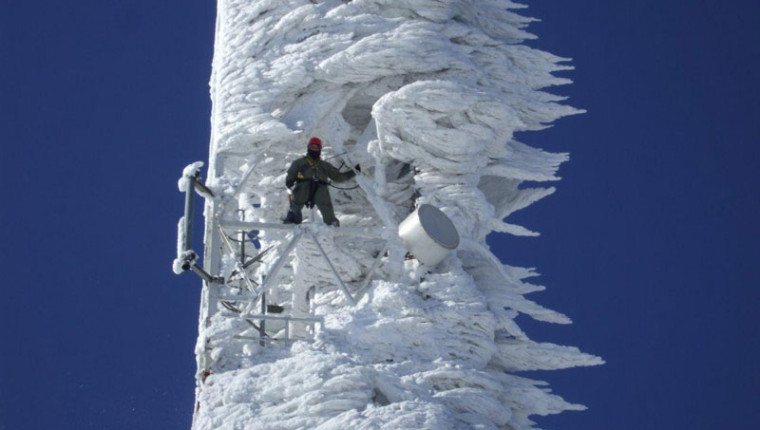
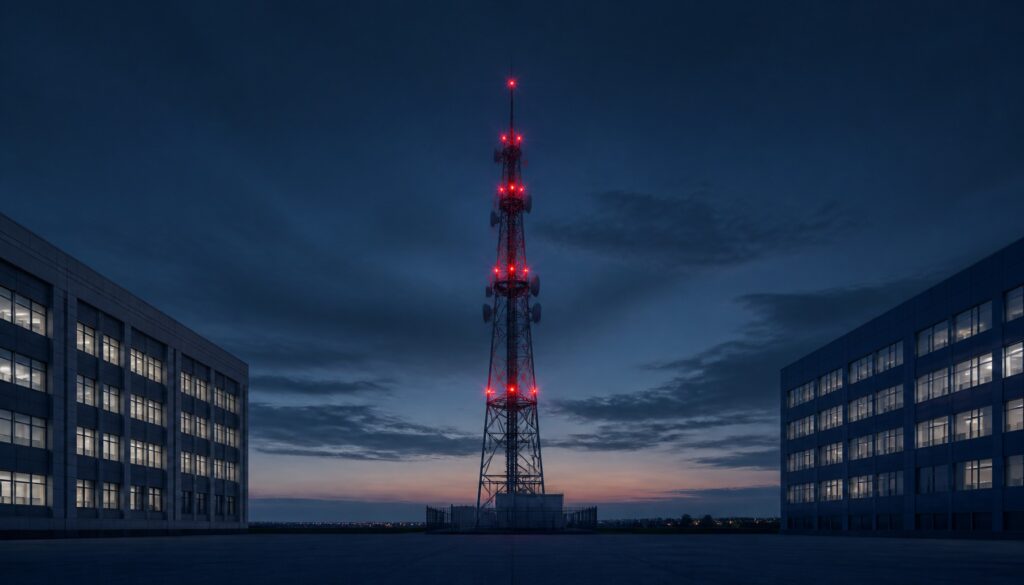
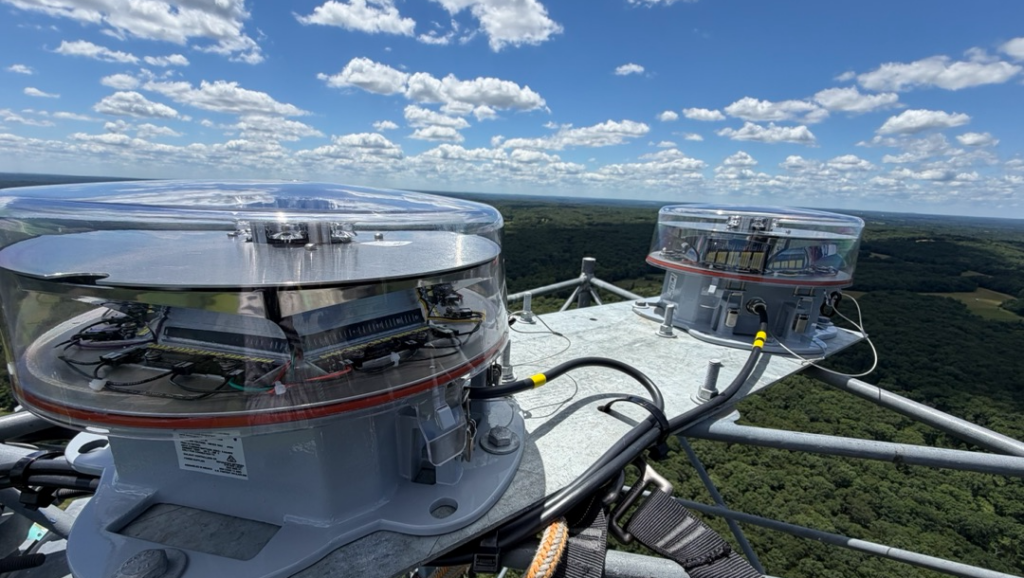
Winter is the hardest season for tower lighting because it raises the odds of an outage and lowers the odds of a fast repair at the same time. Tower lighting is the set of FAA-required obstruction lights that mark a structure for pilots, and it depends on three things winter attacks: site power, exposed equipment at height, and a crew that can reach it.
- Power. An obstruction light with no power is an outage, whatever the cause. After Winter Storm Fern crossed the Southeast and Mid-Atlantic in January 2026, an FCC status report found fewer than 1.7% of cell sites in the affected area out of service, and attributed those outages to commercial power failures and backhaul disruptions rather than to physical damage to towers (Wireless Estimator, January 27, 2026).
- Ice and wind together. Glaze ice increases the diameter and drag of every tower, which amplifies wind forces. National Weather Service reports cited in the same article saw ice near one inch in parts of Alabama, Mississippi, Louisiana and Oklahoma during Fern.
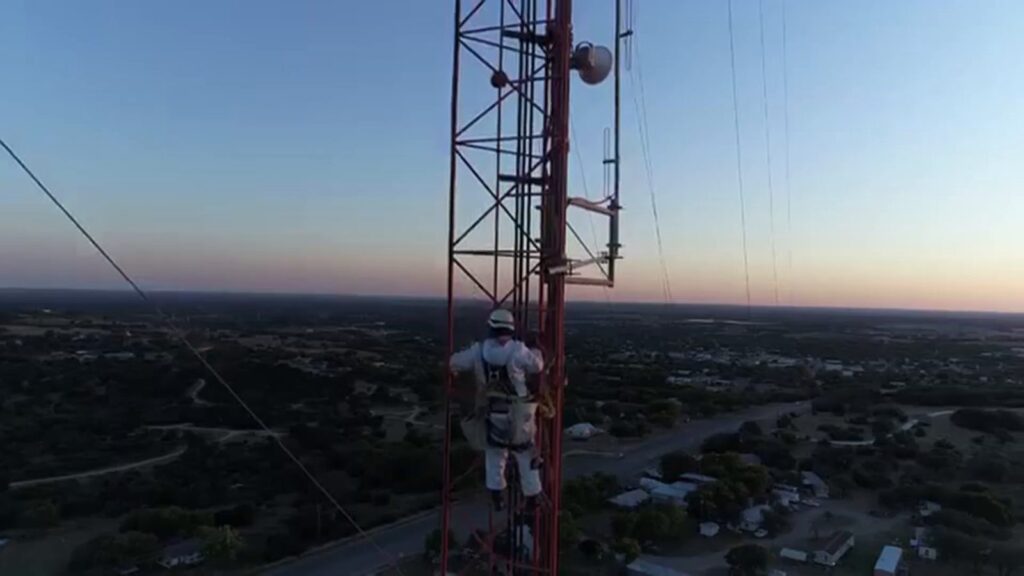
- Access. A light that fails 300 feet up cannot be fixed from the ground, and winter is when the climb is least safe, most expensive and longer to accomplish.
This winter has its own wrinkle. NOAA’s Climate Prediction Center has an El Niño Advisory in effect and, in its October 8, 2026 discussion, calls a strong to very strong El Niño likely through January to March 2027 (NOAA CPC). No seasonal outlook tells you which tower loses a beacon, which is the point: winter risk is something to budget for, not something to forecast.
What does the FAA require when a tower light fails in a storm?
The FAA requires the same thing in a storm as on a clear night: if a top steady-burning light or any flashing obstruction light is not corrected within 30 minutes, the owner must report it. 47 CFR §17.48 asks for the circumstances that caused the failure as part of that report, along with the probable restoration date and the tower’s Antenna Structure Registration number.
The same rule covers a repair that drags on. If the lights cannot be repaired within the FAA’s NOTAM period, the owner must notify the FAA to extend the outage and give a new return-to-service date, and repeat that until the lights are fixed. A winter repair that waits two weeks for a safe climbing window falls squarely under that provision.
For the step-by-step version, see what to do when a tower light goes out. In short, the storm explains the outage. The storm does not report it for you.
Why do winter tower light repairs take longer?
Winter tower light repairs take longer because the repair is a climb, and a climb has to wait for safe conditions. OSHA notes that tower employees climb from 100 feet to more than 1,000 or 2,000 feet, that they climb throughout the year including during inclement weather, and it lists inclement weather among the hazards most frequently encountered in the work (OSHA, Communication Towers).
Three things stretch the timeline in practice:
- The weather window. Ice on the structure and high wind keep a crew on the ground until conditions clear.
- Mobilization. After a regional storm, every owner in the area is calling the same crews, and roads to remote sites may not be open.
- Parts. A failed fixture or controller has to be on the truck before the climb, or the climb happens twice.
Each day of delay is another day the NOTAM is open and another day on the owner’s record. The delay is not negligence. It is still the owner’s outage.
What does a winter tower light repair cost?
A winter tower light repair costs what any unplanned repair costs, plus whatever the season adds in delay and repeat trips. Without a warranty, every failure is its own project: a climb, a mobilization, parts and labor, all billed after the fact. We published our first tower lighting cost study in 2017 and re-ran the same analysis in 2026.
Those figures are from our 2017 and 2026 cost comparison, which found the estimated annual cost just to comply with FCC tower-marking rules rose 33% over that period. A second mobilization after a missed weather window is how a routine repair grows into a much larger cost.
How does a flat rate change a winter failure?
A flat rate changes a winter failure from a budget event into an operations event. Under our Assurance Warranty, coverage is all-inclusive for any type of failure, on the ground and on the tower: equipment and materials, labor and mobilization. Defective equipment is either repaired or replaced, with no per-incident cost.
The LumenServe℠ Price Guarantee holds that rate flat for up to five years, in writing, with the rates after that disclosed up front. The practical effect in winter is simple. If a weather window closes and the crew has to come back, the second trip, the budget impact is ours to fund, not yours.
A pre-winter checklist for tower owners
A pre-winter check takes an afternoon and is worth doing whoever maintains the lights. Work through it before the first hard freeze.
- Prove the alarm path. Confirm that a failed light actually produces an alert that reaches a person, at night and on a holiday.
- Test day mode, night mode and the photocell. Shorter days mean more hours in night mode and more hours for a marginal fixture to fail.
- Pull the last quarterly inspection. Anything it flagged is cheaper to fix in October than in January.
- Put the NOTAM details where the on-call person can find them. That means the ASR number, the structure height and the FAA line, 877-487-6867.
- Know who climbs. Confirm which crew responds, how fast, and what a second mobilization costs.
- Check the log. Outage and repair records must be kept for two years (47 CFR §17.49).
- Decide who carries the repair cost. If the answer is “we find out when the invoice arrives,” that is the item to fix first.
- Or skip all of this and let us manage it.
The checklist will not stop an ice storm. It decides whether the storm is an inconvenience or an unbudgeted project.
How we handle a winter outage
We handle a winter outage the same way we handle any outage, with the cost already settled. For a tower on TLaaS®, or on Peace of Mind with the Assurance Warranty, the sequence is:
- Our dual NOCs see the failure. They watch system status, power and health 24/7/365.
- We file the NOTAM within 30 minutes of any qualifying outage.
- We dispatch our own certified crew and climb when it is safe to climb.
- We repair or replace the equipment, and extend the NOTAM if the weather makes us wait.
- We keep the daily logs, NOTAM history and inspection records for two years, so the file is ready if anyone asks.
- Once the repair is done, we help you clear your NOTAM.
We monitor and support more than 1,300 sites this way. The owner hears about the outage from us, already handled, and does not see a bill for it.
Ask us what your towers would cost at a flat rate before winter
Frequently asked questions about winter tower lighting
Does bad weather excuse a tower light outage?
No. If a top steady-burning or flashing obstruction light is not corrected within 30 minutes, 47 CFR §17.48 requires a report to the FAA. The cause of the failure is one of the things you report.
How long can a tower light stay out while waiting for safe weather?
As long as the repair takes, provided the NOTAM stays current. If the lights cannot be repaired within the FAA’s NOTAM period, the owner must notify the FAA to extend the outage with a new return-to-service date, and repeat until fixed.
What does it cost to replace a tower light bulb?
Our 2026 cost study puts one bulb change with crew labor at $1,601 to $6,670, up from $1,200 to $5,000 in 2017. Height, access and a repeat trip after bad weather push a repair toward the top of that range.
Does a tower lighting warranty cover the climb?
Ours does. Unlike a parts-only warranty, the Assurance Warranty includes all labor, mobilization and expenses, on the ground and above ground, so a repair high on a structure never becomes a separate charge.
Do LED tower lights hold up better in winter?
LED systems are more reliable than the incandescent lamps they replace, which means fewer outages and fewer NOTAMs in any season. With TLaaS® we install a new LED system at our cost and cover its maintenance and repair in one flat monthly fee.
Sources
- 47 CFR §17.48, Notification of extinguishment or improper functioning of lights (Cornell LII)
- 47 CFR §17.49, Recording of antenna structure light inspections in the owner record (Cornell LII)
- OSHA, Communication Towers
- Wireless Estimator, “Fern’s ice loading strains power and backhaul, towers remain upright under design standards,” January 27, 2026
- NOAA Climate Prediction Center, ENSO Diagnostic Discussion, October 8, 2026
- LumenServe, 2017 and 2026 tower lighting cost comparison