Short answer: There is no single sticker price for LED tower lighting. A complete FAA-compliant system can run from a few thousand dollars on a short structure to well into five figures on a tall tower with high-intensity beacons, because the cost is driven by the tower’s height, the required light intensity, how many levels need fixtures, and the certified-crew labor to install it at height. The hardware is also only the beginning: monitoring, NOTAM filing, inspections, and repairs are ongoing costs for as long as you own the system. Below is what actually drives the number, and how Tower Lighting as a Service removes the upfront cost entirely.
For the full rulebook behind these costs, see our complete guide to FAA tower lighting requirements, which covers the monitoring, inspection, and recordkeeping duties every owner carries. This post focuses on what a system costs.
TL;DR
- There is no flat price. Cost scales with tower height, light-intensity class, number of lighting levels, and install labor.
- Individual FAA fixtures range from roughly a few hundred dollars for a low-intensity L-810 to several thousand for a high-intensity beacon. A full system is many fixtures plus a controller and a certified climbing crew.
- The larger long-run cost is ongoing FAA compliance: 24/7 monitoring, NOTAM filing, and inspections.
- LED cuts both energy and maintenance. Obstruction LEDs are rated 50,000+ hours versus roughly 5,000 for incandescent.
- Tower Lighting as a Service (TLaaS®) delivers the LED system with $0 upfront and folds compliance into one predictable fee.
What drives the cost of LED tower lighting?
Four factors move the price more than anything else. Get these straight and any quote you receive will make sense.
- Height and intensity class. Structures over 200 feet above ground level generally require FAA obstruction lighting under Advisory Circular 70/7460-1 (FAA obstruction-lighting basics). Taller towers need brighter, more expensive fixtures, stepping up from low-intensity red to high-intensity white strobes.
- Number of lighting levels. A tall tower is not lit at the top alone. It needs marker levels up the structure, and every level adds fixtures, wiring, and labor.
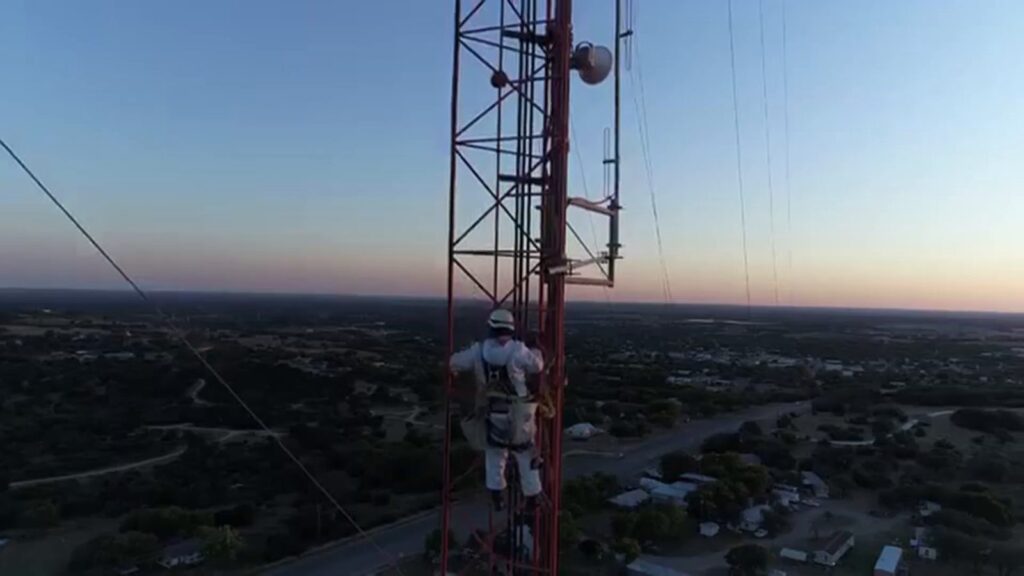
- Install and tower crew. Certified climbers, rigging, and site access are a major line item, especially on tall or remote sites. Labor often rivals or exceeds the hardware.
- Permitting and paperwork. Lighting changes involve FAA and FCC sign-off, which adds time and coordination cost before a crew ever climbs.
How much do the lights themselves cost?
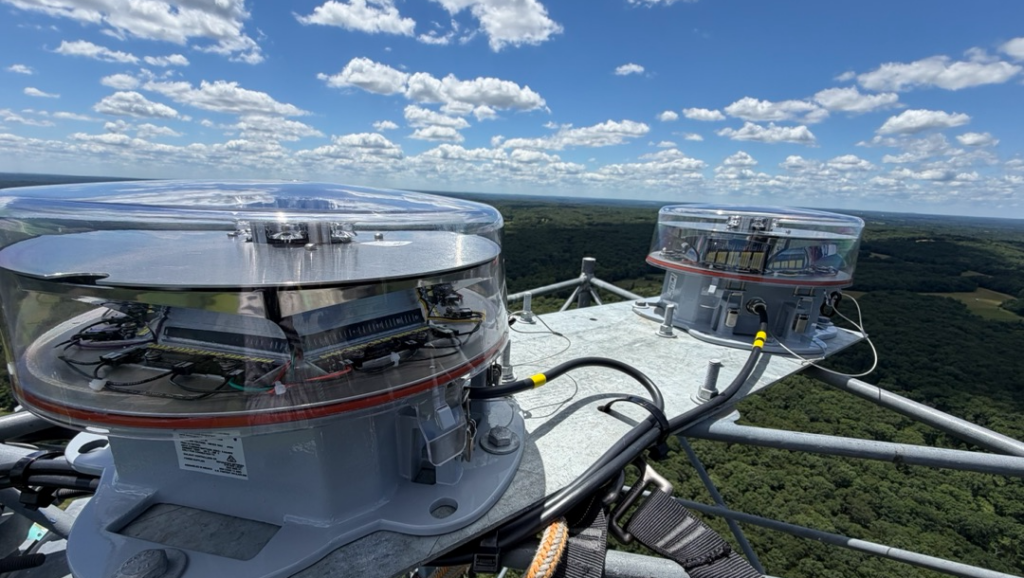
FAA obstruction fixtures are commercially available and priced by intensity class. As a rough scale, a low-intensity red unit is the least expensive and a high-intensity strobe is the most (example FAA tower-lighting catalog):
Those are per-fixture figures, and that is the trap in comparing prices. A real system multiplies them: a tall tower needs several fixtures across multiple levels, plus a flasher/controller, wiring, and a certified crew to install everything at height. That is why installed-system quotes vary so widely, and why a “what does it cost” answer is really a “what does your tower need” conversation.
The costs owners forget: ongoing FAA compliance
Buying the hardware is the beginning, not the end. For as long as you own the lighting, federal rules require you to keep it working and to prove it.
- Monitor and report outages. A top steady-burning or any flashing obstruction light that is not restored within 30 minutes must be reported to the FAA by filing a NOTAM (47 CFR §17.48). Here is exactly what that process looks like.
- Inspections and records. Routine inspections and recordkeeping are required under 47 CFR Part 17.
- Repairs. Failures happen, and fixing a light often means an emergency tower climb.
- Violation exposure. A missed outage or lapsed record is a compliance risk that sits with the tower owner, not the contractor.
Over a system’s life, these recurring obligations frequently cost more than the original hardware.
Do LED tower lights actually save money?
Yes. Lower energy use and far less maintenance are why owners upgrade from incandescent.
- Lifespan. Obstruction LEDs are rated 50,000+ hours, versus roughly 5,000 hours for incandescent lamps (LED aircraft-warning-light overview). That means far fewer bulb changes and truck rolls.
- Energy. LEDs draw a fraction of the power of the incandescent lamps they replace, trimming the monthly power bill on a light that runs every night.
- Fewer outages. More reliable fixtures mean fewer NOTAMs and less compliance risk.
The one catch is the upfront cost of the upgrade, which is exactly what the service model removes.
Buy the hardware vs. Tower Lighting as a Service
The real decision is not which LED to buy. It is whether to own the system and everything that comes with it, or to buy the outcome as a service.
The no-upfront-cost option: Tower Lighting as a Service (TLaaS®)
Instead of buying an LED system and then owning every cost that follows, LumenServe installs a new, industry-leading LED system at its own expense and delivers everything else as one service. With TLaaS® you get:
- No upfront capital cost for the lighting system.
- 24/7/365 monitoring, automatic outage detection, and on-time NOTAM filing and clearing.
- Inspections, maintenance, and repairs handled for you.
- Compliance documentation kept audit-ready.
You get modern LED lighting and full FAA/FCC compliance for a predictable fee, with no capital request, no crews to manage, and no 2 a.m. NOTAM scramble. LumenServe pioneered TLaaS® and supports 1,000+ towers nationwide.
Get a TLaaS® quote for your towers →
For how individual fixtures combine into complete systems, see the FAA tower lighting system types, and for more on the upgrade itself, the top reasons to upgrade to LED tower lighting.
Frequently Asked Questions About LED Tower Lighting Cost
Quick answers to the questions buyers ask most.
How much does LED tower lighting cost?
There is no single price. Individual FAA fixtures range from a few hundred dollars for a low-intensity L-810 to several thousand for a high-intensity beacon, and a full installed system adds a controller, wiring, and certified-crew labor. Tower height and intensity class drive the total.
Is there a way to get LED tower lighting with no upfront cost?
Yes. With Tower Lighting as a Service (TLaaS®), LumenServe installs the LED system at its own expense and you pay one predictable fee that includes monitoring, NOTAM filing, inspections, and repairs, eliminating the capital outlay.
Do LED obstruction lights save money versus incandescent?
Yes. LED obstruction lights are rated 50,000+ hours versus roughly 5,000 for incandescent, and draw far less power, cutting both energy bills and maintenance truck rolls over the life of the system.
What ongoing costs come with tower lighting?
Beyond hardware: 24/7 monitoring, filing and clearing NOTAMs for outages (a top or flashing light out over 30 minutes must be reported per 47 CFR 17.48), routine inspections and recordkeeping under 47 CFR Part 17, and repairs that often require a tower climb.
At what height does a tower need FAA lighting?
Generally, structures over 200 feet above ground level require FAA obstruction lighting under Advisory Circular 70/7460-1, though structures near airports can require it at lower heights. Taller towers need higher-intensity fixtures.
Sources
- Flight Light, Obstruction lights / aircraft warning lights FAQ (FAA height threshold, fixture types, AC 70/7460-1)
- eCFR, 47 CFR §17.48 and 47 CFR Part 17 (outage reporting, monitoring, inspections, records)
- LED aircraft warning lights, overview (LED lifespan and energy vs. incandescent)
- P&R Tech, FAA tower lighting catalog (example fixture types and pricing scale)